
Corporate Travel Management Solutions: Complete Guide, Real-World Use Cases, and Benefits for Modern Enterprises
Managing corporate travel at scale involves more than booking flights and hotels. It requires smart coordination, policy compliance, risk mitigation, and cost control—functions that are often difficult to manage manually. That’s where corporate travel management solutions come into play. These digital systems help organizations plan, execute, and oversee business travel efficiently while aligning with internal policies and budgets.
In this in-depth guide, you’ll learn what corporate travel management solutions are, how they work, the technologies that power them, and how companies use them to optimize business travel in practical, measurable ways.
What Are Corporate Travel Management Solutions?
Corporate travel management solutions are integrated platforms or service ecosystems that support end-to-end planning, booking, tracking, and analysis of business travel. These solutions are designed to help companies simplify the complexities of travel logistics while ensuring alignment with company policies and spending limits.
Unlike personal travel platforms, corporate solutions are tailored to enterprise needs, incorporating features like policy enforcement, approval workflows, traveler safety tools, and expense integrations. Whether implemented as software-as-a-service (SaaS) or managed through travel management companies (TMCs), these systems offer centralized control with decentralized access for employees.
These solutions are especially valuable for mid-size to large organizations with frequent travel demands, multiple cost centers, and risk management requirements. By consolidating travel data and automating key processes, companies gain visibility into travel expenditures and the ability to take corrective actions in real time.
Key Components of a Corporate Travel Management System
Corporate travel management solutions typically include a wide range of features to meet business and traveler needs:
-
Centralized Booking Engine: Allows employees to book flights, hotels, ground transport, and more through one unified interface.
-
Custom Travel Policies: Administrators can define limits, preferred vendors, and booking rules to ensure compliance.
-
Approval Workflows: Managers are notified for quick approvals while maintaining full control over budget limits.
-
Traveler Tracking and Duty of Care: Real-time location data helps ensure traveler safety during global travel disruptions.
-
Expense Management Integration: Travel bookings are synced with reimbursement systems to reduce administrative workload.
-
Reporting and Analytics: Detailed reports help businesses track spending, policy violations, and vendor performance across the organization.
These systems are designed to be scalable, allowing businesses to grow their travel programs without losing control over costs or operational efficiency.
Technology Benefits in Corporate Travel Management Solutions

Technology has fundamentally transformed how corporate travel is managed. The following are key advantages offered by modern digital travel solutions:
-
Automation Reduces Human Error: Booking, approvals, and expense entries are streamlined, minimizing manual tasks and data entry errors.
-
Artificial Intelligence and Personalization: AI-powered recommendations help travelers choose flights or hotels based on preferences, policy, and past behavior.
-
Cloud Accessibility: Cloud-based platforms provide real-time access to itineraries and reports from any device, improving responsiveness.
-
Mobile Integration: Apps allow employees to receive alerts, submit expenses, and modify bookings while on the move.
-
Data-Driven Insights: Real-time dashboards reveal inefficiencies in travel spending and allow businesses to renegotiate supplier contracts based on actual usage.
By embracing technology, businesses not only save time and money but also enhance the traveler experience—leading to higher employee satisfaction and productivity.
Real-World Example Platforms and Use Cases
1. SAP Concur
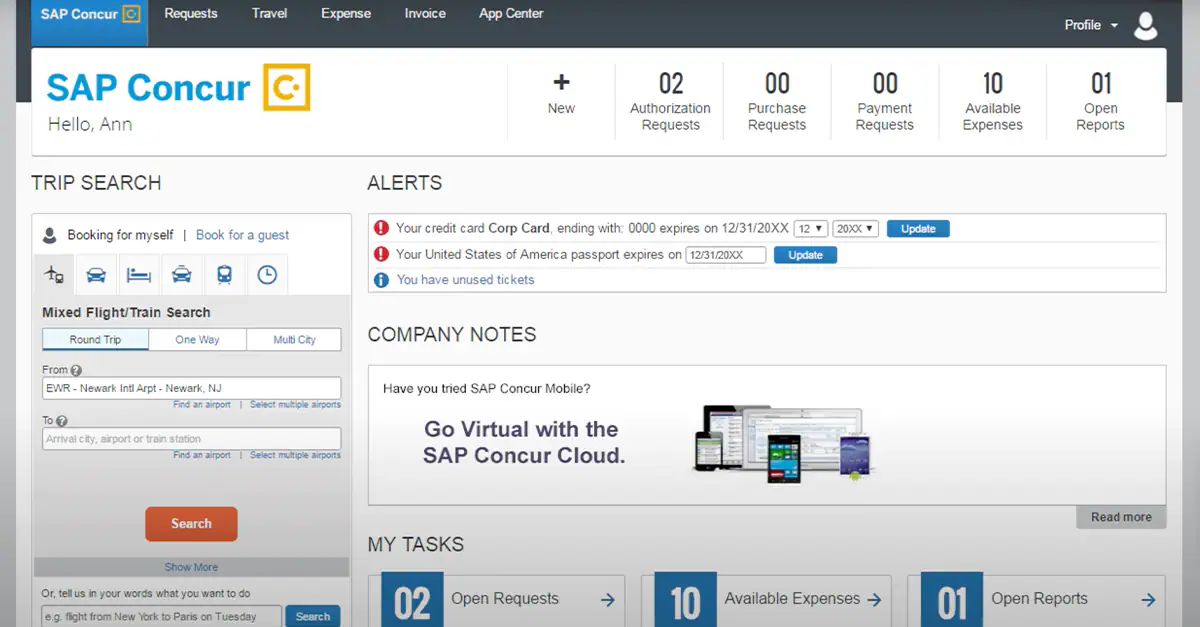
Description: SAP Concur is a market leader in corporate travel and expense management. It offers a unified platform for booking, policy enforcement, expense tracking, and analytics.
Relevance: A global manufacturing company with offices in five countries uses SAP Concur to centralize travel bookings and expenses. Managers approve travel plans via automated alerts, while finance teams use the reporting tools to optimize spending per region.
2. TravelPerk
Description: TravelPerk offers a user-friendly interface and extensive travel inventory. It includes custom policy tools, carbon offset features, and integrations with major HR and expense systems.
Relevance: A remote-first digital agency uses TravelPerk to coordinate quarterly team meetups. Employees book within policy limits using the mobile app, while administrators track carbon impact and budget in real-time.
3. Egencia (an Amex GBT company)

Description: Egencia provides intelligent booking, compliance monitoring, and real-time traveler support with a focus on mid- to large-sized businesses.
Relevance: A pharmaceutical company with high travel frequency leverages Egencia for its built-in traveler tracking and compliance features. During international conferences, Egencia helps keep track of traveling medical professionals in real time.
4. Navan (formerly TripActions)
Description: Navan blends corporate travel and expense management with powerful automation and data visualization tools.
Relevance: A legal consultancy uses Navan to manage time-sensitive travel for litigation across multiple jurisdictions. The platform ensures rapid approvals and live alerts for flight delays, helping attorneys stay productive on the road.
5. FCM Travel Solutions
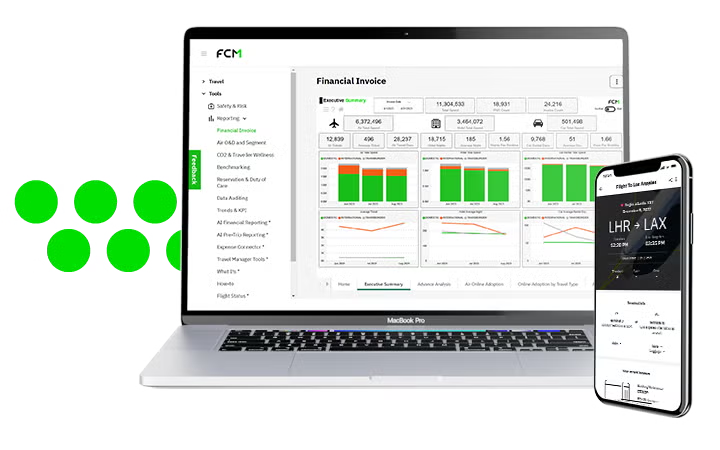
Description: FCM offers personalized travel management services combined with enterprise-grade tech platforms for global operations.
Relevance: An energy corporation with operations in remote regions uses FCM to arrange complex travel involving charter flights and site transport. Their system ensures every step aligns with safety and compliance guidelines, even in high-risk environments.
Practical Benefits of Corporate Travel Management Solutions
Corporate travel management solutions provide clear advantages in operational efficiency, cost savings, and compliance. Here’s how:
-
Enhanced Cost Control: Businesses can enforce negotiated vendor rates and monitor travel costs in real time, eliminating budget overruns.
-
Policy Compliance at Scale: Employees are guided through booking processes that automatically apply travel rules and restrictions, reducing policy violations.
-
Improved Safety and Responsiveness: With built-in duty of care features, companies can track employees during global events and offer immediate assistance.
-
Streamlined Reimbursement Processes: Integration with expense systems allows automatic syncing of receipts, reducing reimbursement delays and manual tasks.
-
Stronger Supplier Relationships: With comprehensive analytics, companies can negotiate better deals with airlines, hotels, and car rental services based on actual usage.
The benefits extend beyond financial savings—these platforms also improve employee experience, reduce administrative burden, and support sustainable travel initiatives.
Real-Life Use Cases and Problems Solved
Remote Team Coordination
A growing software company with a remote workforce needs to coordinate international travel for quarterly summits. With a travel management solution, employees book flights and hotels within policy through a single app.
Emergency Response During Global Disruption
During a weather-related travel disruption, a multinational consultancy tracks its employees in affected regions via its travel platform. Real-time alerts notify travel managers of stranded employees, allowing them to rebook flights and arrange accommodations immediately through the same platform.
Reducing Compliance Violations
A financial services firm was facing frequent travel policy violations. Violations dropped by 60% in the first quarter, improving budget predictability and audit readiness.
Onboarding New Employees
A company hires 40 new sales reps across four regions. The travel platform helps HR assign pre-set travel profiles for new hires. Each rep receives approved itineraries, spends within limits, and submits expenses easily via a mobile app. HR monitors onboarding progress via integrated dashboards.
Frequently Asked Questions (FAQ)
Q1. How do corporate travel management solutions help with travel policy compliance?
These systems include customizable policy engines that enforce company-specific rules at the time of booking. Employees are shown only compliant options, and any out-of-policy requests trigger automatic manager approvals, reducing human oversight and increasing audit reliability.
Q2. Are these solutions only for large corporations?
No. Many travel platforms offer flexible pricing and modular features suitable for small to mid-sized businesses. Even startups with limited travel needs benefit from centralized control, expense integration, and real-time oversight.
Q3. Can travel management solutions integrate with other business software?
Yes. Most modern platforms offer integrations with HR systems (e.g., Workday), expense tools (e.g., Expensify, SAP), and communication platforms (e.g., Slack). This ensures seamless workflows and data consistency across departments.